Tools Required
-
Digital Multimeter (DMM)
-
Jumper wires with alligator clips
-
Flashlight
-
Basic Hand Tools (Socket set/Wrenches)
Vehicle Preparation
-
Safety First: Park on level ground and chock the wheels.
-
CNG Awareness: No smoking or open flames. Work in a well-ventilated area. If gas is detected (rotten egg odor), evacuate and use an approved combustible gas detector.
-
Electrical: Disconnect negative battery terminals if performing internal harness repairs.
-
Schematic Reference (2022+ Units):
-
L9N Engine: 080A-0764
-
X12N Engine: 080A-0771
-
Fuel Cap Circuit (All): 080A-0785
-
Procedure
Part 1: System Overview
The system utilizes two distinct paths for safety:
-
Starter Interruption: Direct-wired ground signal to Relays #2, #4, and #5 in the outside fuse panel. This is independent of the IFM and physically prevents cranking.
-
In-Cab Warnings: A Slave IFM (CR2052) monitors the ground signal and broadcasts status via J1939 to the Master IFM, which triggers the dash lamp and buzzer.
Part 2: Preliminary Verification
-
Confirm Complaint: Does the engine fail to crank? Are "CNG FUEL CAP OFF" warnings active?
-
Visual Inspection: Ensure all caps are present and fully tightened.
-
Logic Check:
-
If the alarm is ON but the truck starts: The fault is in the warning circuit (IFMs/J1939).
-
If the truck won't crank: The fault is in the direct-wired relay circuit.
-
Part 3: Electrical Diagnostic (No-Crank Condition)
-
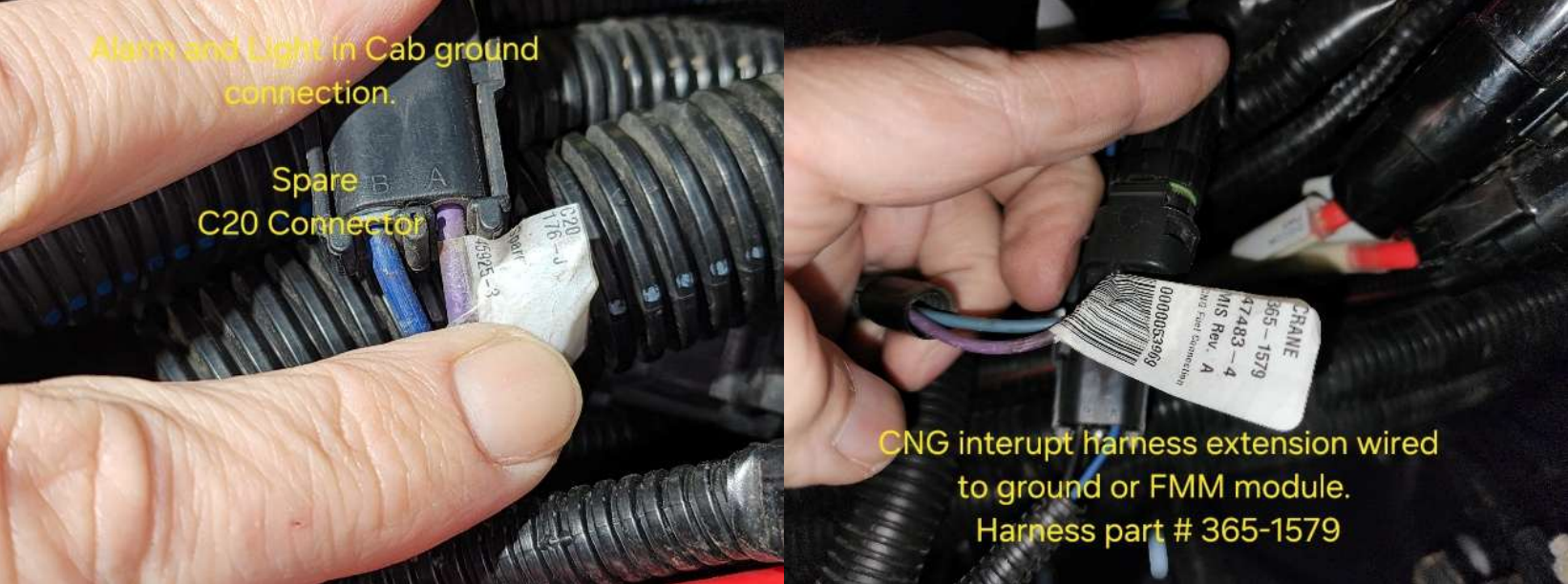
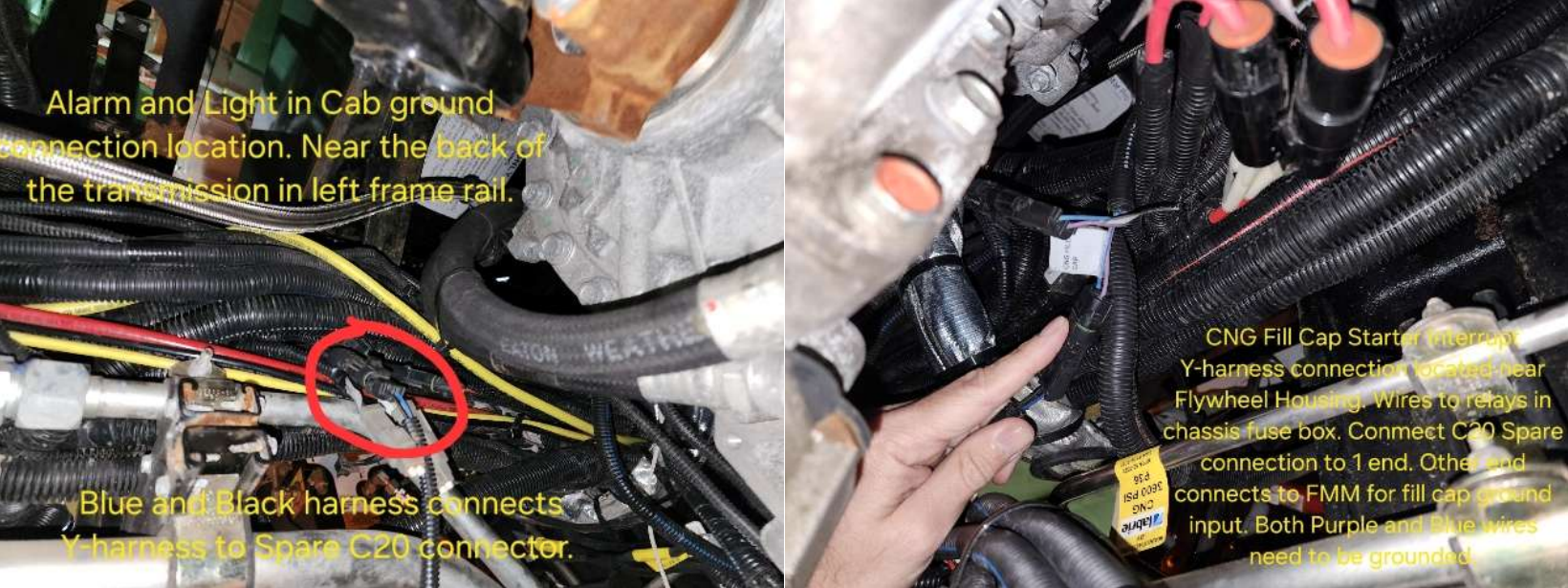
Locate the Y-Harness: Found near the engine flywheel housing. This connects the cap switches to the engine and chassis harnesses.
-
Test Ground Signal:
-
Identify the Blue and Purple wires (ground inputs from caps).
-
With caps installed, test for continuity to ground on these wires at the Y-harness.
-
Result - Ground Present: The caps and their sub-harness are good. Proceed to Step 3.
-
Result - No Ground: Inspect the wiring between the Y-harness and the fuel caps. Check the internal switch in the cap receptacle.
-
Note: For single-port vehicles, Blue and Purple wires must be spliced to the single input wire.
-
-
Bypass Test:
-
Disconnect the Y-harness from the main engine harness.
-
Use a jumper wire to ground the pins for the Blue and Purple wires on the engine harness side.
-
Attempt to start.
-
If it starts: The vehicle-side relays and wiring are functional. The fault is on the Agility/Cap side.
-
If it won't start: The fault is in the engine harness or Relays #2, #4, or #5.
-
Part 4: Intermittent Faults (Wiggle Test)
-
Have an assistant hold the ignition key in the "START" position.
-
Methodically wiggle the Y-harness, the Spare C20 connector, and the ground connection on the left frame rail (near the rear of the transmission).
-
If the starter engages during manipulation, inspect that connector for corrosion or pushed-out pins.